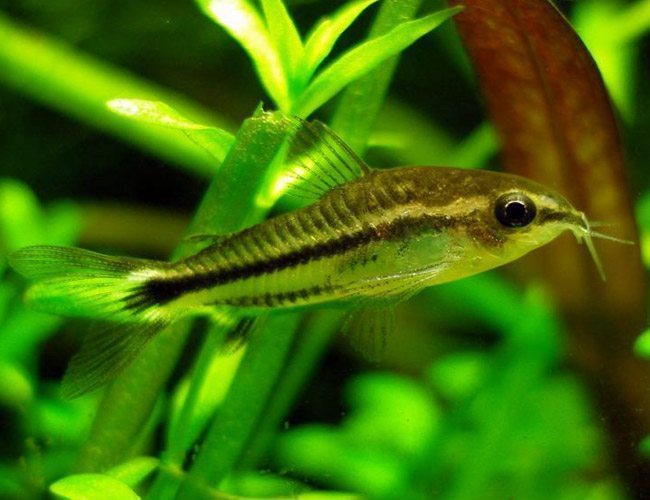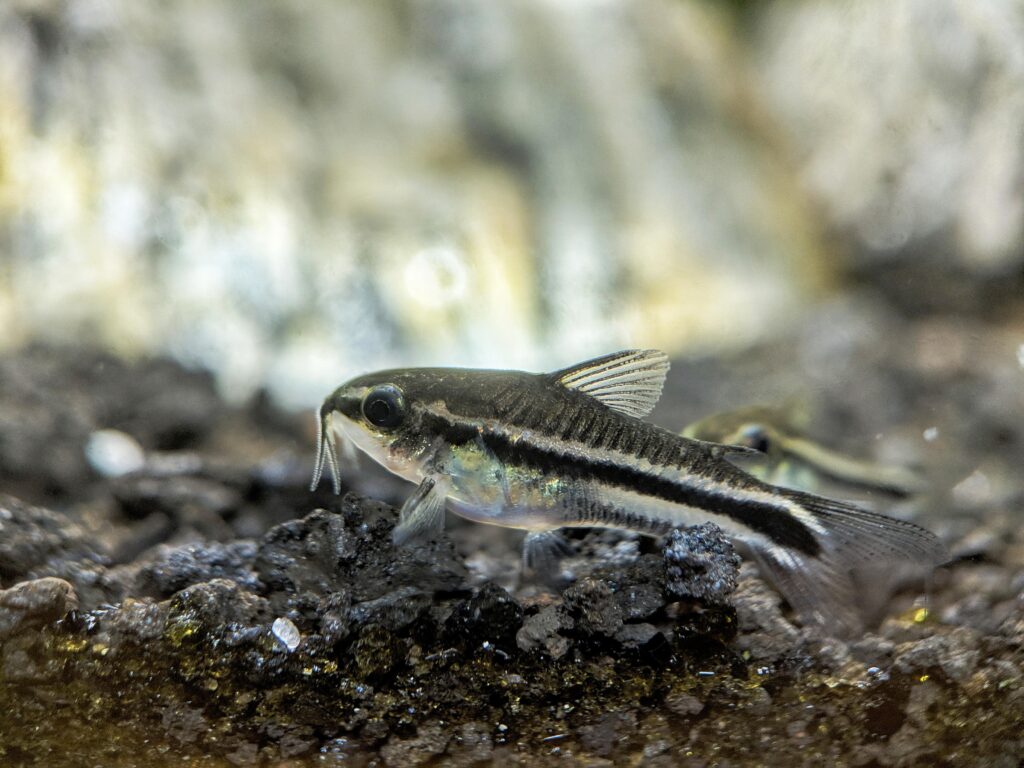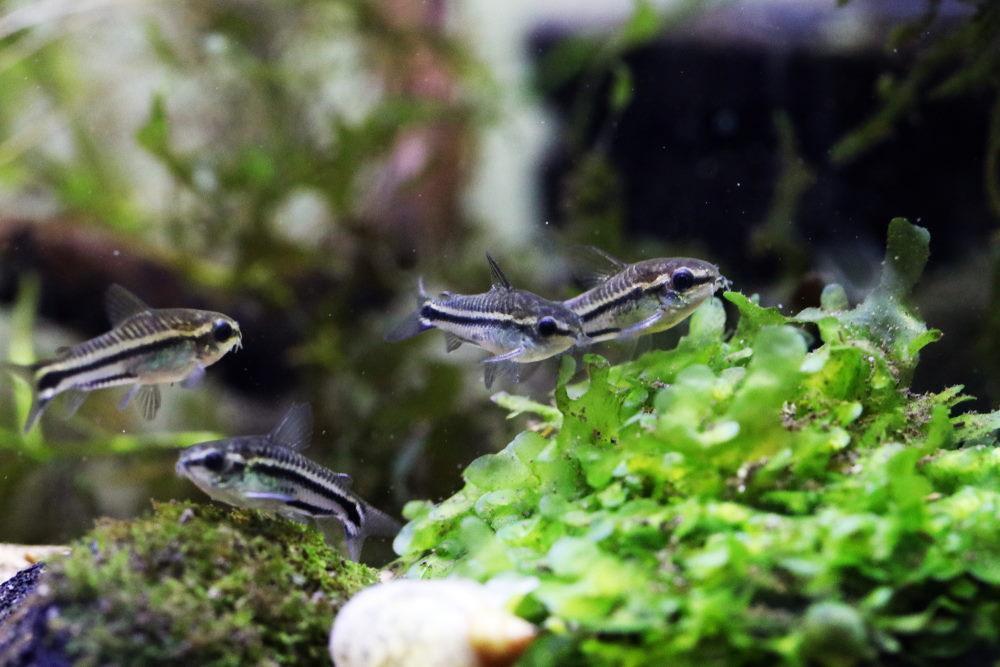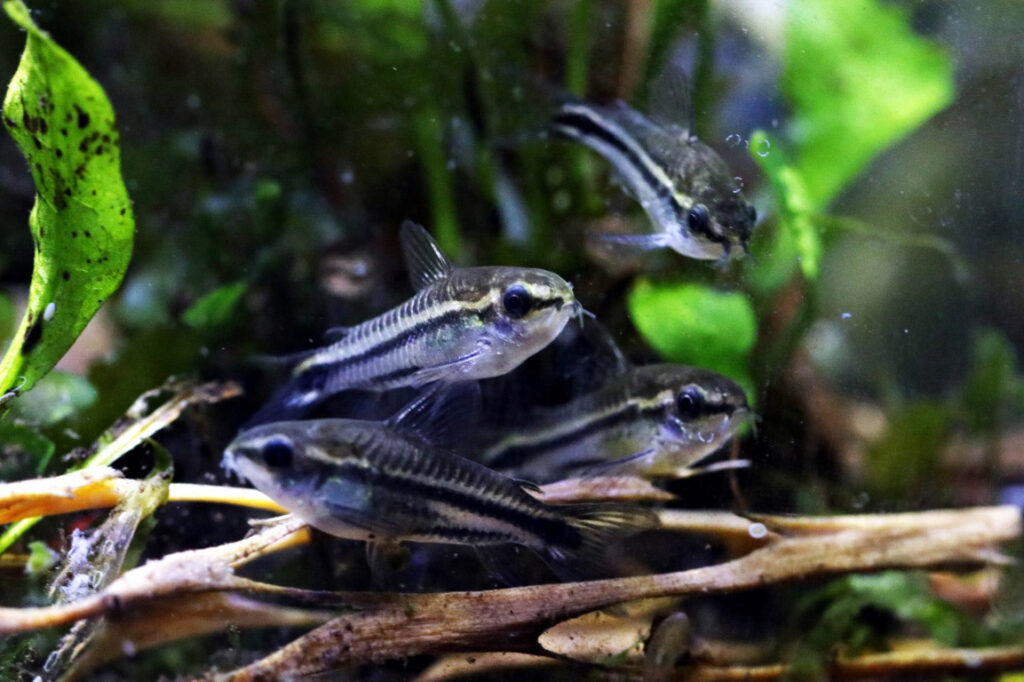

Pygmy Cory is really small fish which are beautiful to look at when kept in groups. They require small aquarium of 10 gallon to accommodate 4 fishes. But these fishes should be maintained properly for them to live longer than their average life span. This can be made possible by providing them proper diet and keeping the tank clean. The beginners guide will provide all the information required to provide an ideal condition for the fishes to live longer.
Pygmy Cory Fish – Overview
| Category | Description |
|---|---|
| Common Name | The common name is Pygmy Cory. They are also called Pygmy catfish or just Cory. |
| Scientific Name | The scientific name is Corydoras pygmaeus. |
| Habitat or Origin | Their habitat is the Madeira River basin in Brazil. Many of these fishes are seen in the South American continent. |
| Average Size | Cory fishes are really small in size. The adult reaches 0.75 inches. |
| Coloration | The body is silver in color. There is a black line that runs horizontally from snout to tail fin. Along the lower body, a second thinner line which is also black in color. |
| Life Span | Their average life span is 3 years. But they can live longer or die earlier depending on the way they are taken care of. |
| Diet | As these fishes eat from the bottom of the tank, fish pellet and wafers can be easily fed to them. They can also be given brine shrimp, insect larvae, and bloodworms. Some green vegetables from the kitchen can also be given to these fishes. They can be fed once or twice a day for 2 minutes. |
| Gender Identification | The female fishes are broader than males. This is evidently seen when the females are carrying eggs. |
| Behavior | They are very peaceful fishes and are mostly seen at the bottom of the tank. They also swim up in the tank. They are sometimes seen on the surface of the tank to breathe oxygen from the atmosphere with the help of their intestine. But they do this only when the water is not clean enough. |
| Compatibility | Pgymy cory is small fish hence the fishes that can be kept in the aquarium should have their mouth smaller than one inch. They are also peaceful fishes hence can get along with many species like Cherry Barb, Dwarf Gourami, Mollies, Zebra Danios, Guppies, Marbled Hatchetfish, Neon tetras, Kulhi Loaches, and Octocinclus. Mystery snails and Chery shrimps can also be kept in the type of invertebrates. Pygmy Cory can be kept together in groups of 4 or more. |
| Ideal Tank Conditions | Sand is the best substrate for Cory fishes. They require a lot of hiding places. This can be provided by plants like Amazon Swords, Java Fern, and a carpet of Dwarf Hairgrass is also most enjoyed by these fishes. Decors, rocks, and bogwoods can also be used. A group of 4 – 8 fishes can be easily accommodated in a 10-gallon aquarium. |
| Water Parameters | The water temperature should be 72-79 degrees F. the pH should be maintained within 6-8. This can be made sure by water filter. |
| Breeding | Breeding is easy but taking off the fry is a little difficult. Under healthy conditions, spawning happens naturally. The female holds some eggs in a pouch by the pelvic fin and the male fertilizes them. The female lays up to 100- eggs at a time. The eggs attach to any safe surface until they hatch. Parents should now be separated. After the fry emerges out, they can be fed infusoria or crushed flakes as they can eat very small food. |
| Common Diseases | They are easily affected by red blotch disease. This is seen as bloody sores on their belly. This is caused by the water condition and low oxygen level. Another common disease is Ich- white spot disease. This is caused by the addition of new fishes in the tank and unclean tank equipment. |
| Approximate Cost | They cost approximately $4.99. A school of 5 fishes is also available for $ 24.99. |
| What to look when buying | These fishes are often mistaken with Corydoras hastatus. Just look for any black spots on the tail. If they are present, they are not Pygmy Cory. |
| Species in the Market | Venezuelen Pygmy Cory is available for $8.99. |