
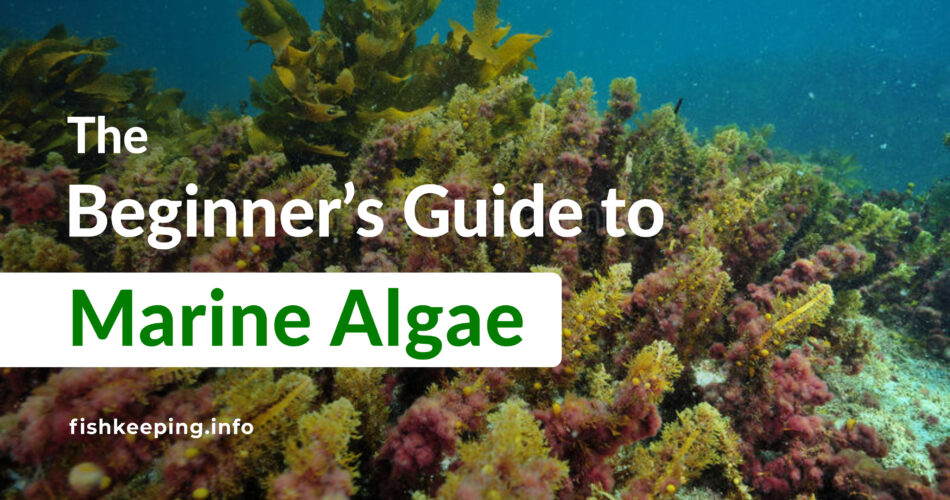
Have you ever done scuba diving? It is that one thing that must be added to your bucket list ASAP!! People are fond of beaches, diving, taking underwater experiences, and whatnot! They love being around water. But have you ever thought of a world that exists beneath the beautiful water waves? I guess, not entirely! So, to tell you, there is a huge entire marine life underwater where you can explore a number of aquatic living organisms holding thousands of species altogether below a single cover. But what completes this underwater life is ‘Marine Algae’, popularly known as Seaweed.
Speeding up the things, we are here to discuss some deep facts about Marine Algae or Seaweed. This article will give you a transparent impression of how they live and influence the lives of other fishes and etc. So, without wasting a single minute, let us find out some interesting details about marine algae and see what all adventure we can get underneath the water. Are you up for the same?
Alright,
Let us start!
Marine Algae: Seaweed
A marine alga is a multicellular organism that is considered to be one of the oldest organisms in the plant kingdom. It carries all three varieties of green, red, and brown algae. You might know a few types of marine algae such as kelp, phytoplankton, and gulfweed. Seaweed basically does not have flowers, roots, or other plants. However, they have chlorophyll but still; they prefer to reproduce through pores. In Japan, these seaweeds are used as a major source of nutrition, carbohydrates, fatty acids, and proteins. Most importantly, seaweeds cover a very special role where they absorb carbon dioxide and produce back approximately 50% of the oxygen which helps in creating a healthier environment.
Types of Marine Algae:
Brown Algae
Found in waters with gentle and breezy climates, brown Algae is one of the most common seaweed found in large quantities. These algae are held tight from the surface of the sea by their root-like fibers called “Holdfasts”.
Brown Algae, also called kelp, carry 30 varieties and can be found in rocky coastal areas. You must definitely put them in your aquarium as they have good compatibility with your fish. They are harmless and have diatomaceous microbes which absorb CO2 and release oxygen in the fish tank, improving the level of oxygen for fish.
Green Algae
Found in freshwater habitats and even in moist soils, green algae are categorized into three subtypes, i.e. unicellular, multicellular or multicellular. Approximately more than 40,000 species have been found on the planet earth which are considered good algae for fishes. As a fish keeper, you can give a green signal to green algae but up to a certain limit. Many keepers believe it is a perfect diet source for their fish. This is to be noted: There is a certain kind of algae that grows rapidly, converting the perfect water of a fish tank to green and gloomy.
Red Algae
The red algae carry around 6000 species of its own with some great vibrant colors just because of the phycoerythrin pigment present in it. Red algae can live even in the greater depths of the sea, and this is done because they are capable of absorbing blue color light. On the other hand, if you, as a keeper, are thinking to be a part of your aquarium make sure you read all the does and don’ts as these algae produce toxins in the water, which can kill fishes, decrease their oxygen level and make them problematic to eat.
Aquarium Algae
Though being sub-specie of marine algae, the aquarium algae are somewhat similar to seaweed. Carrying the color combination of blue and green, this alga is commonly found in home aquariums and is often called slime algae or smear algae. This kind of algae is good for the fish tank as they help in decreasing the levels of toxic nitrogen forms present in the water. They enhance the spread of oxygen and give your fish a healthier environment. But, excess aquarium algae can harm your fish. So, keep checking your fish tank every once in a while to avoid mishappenings.
Golden Algae
Golden algae are basically found in fresh and cold water. Sometimes they grow in moist soil and deep sea as well. Made up of around 1000 species, these algae are unicellular or colonial, based on the subspecies. Never plant Golden algae it in your aquarium, as they kill fishes in bulk. It is due to their toxic properties where the clean and fresh fish tank water of fish tank can turn poisonous. So, avoid this species and go with brown algae instead.
You might also love: 9 Most asked questions on Aponogeton plant
Three things you need to know before planting seaweed in the aquarium
Seasonal Seaweeds
Taking responsibility for planting seaweed in the fish tank is tough as you must be aware of the type you are putting. Species of the seaweed change according to the seasons, i.e. some seaweed are annuals while other lasts for a season. However, you can give them artificial sunlight & temperature all the time but they are scheduled to expand at a certain time without which they cannot survive. Tanks carrying seasonal marine algae are observed as a failure as they don’t get the environment that they actually need. So think before you proceed!
Difficult Plantation
Fishes love marine algae as they are easy to access for their food. But do you know how difficult the plantation is? So, to tell you, algae are delicate in nature, i.e. if you try to rip them off from the surface, they will spread their petals so quickly that they will float around when transferred to the aquarium. If you really want to go with a plantation and avoid the separation of petals, you can tie them with pebble and string to weigh them down; this will keep them healthy and free at the same time.
Fear of getting overeaten
A lot of aquatic creatures like snails, crabs, prawns, etc. are dependent on such marine algae. But a large amount of section is covered by fishes where they love to nibble on seaweed every time. The major pressure arises when these fishes overeat marine algae. Yes, it does happen which creates a problem for them. So planting seaweed can be dangerous for your fish as they can overeat them and die. In that case, try giving them of ample amount of fish food so that they don’t pay much heed to seaweed.
Most Common Fishes you must add in your aquarium that eat Marine Algae
Half-moon Fish
Holding the botanical name Medialuna Califoriensis, these kinds of fishes are comfortable in eating both plants and animals including marine algae. Basically, these fishes are named after the fishtail which is in the shape of a semi-circle or half-moon and is found in California. Half-moon fishes are good for the aquarium as they are helpful in getting along with other tank mates, granted that, they are not equally aggressive as other fishes. However, it is certified that female half-moon fishes are far more patient than males. So, always make sure of everything before you prepare a fish tank.
Opaleye
Opaleye is dark green with yellow and white patches near its fins. Their tail is square in shape and they flourish in the shallow reefs and seaweed area. The Pacific Ocean is one of their favorite places to live as they need space to explore their territories with the other fishes. Opaleye is very helpful for your aquarium as they feed seaweed and keep the fish tank healthy and productive. They have an interesting ability to change their colors according to their surroundings and thus are called the popular marine aquarium fish. Above all, make sure to put brown algae in the fish tank as they love them!
Pacific Blue Tang
Pacific blue tang are omnivores in Indo-Pacific, from Eat Africa to Japan according to their habitat. These fishes grow up to 13 inches and carry different names apart from their original ones, i.e. regal tang, palette tang, hippo fish, and blue surgeonfish. A pacific blue tang is a small toothed fish that graze tiny seaweeds and other small plantlike algae. Before keeping them in the aquarium, always confirm if the water is clean and shallow so that they can clearly see the seaweeds that grow in between the rocks and on the reef surface.
Benefits of Marine Algae in Fish Food
- Enhance Overall Growth
- Improves Productivity
- Fights Against Disease
- Enhance their inner strength
- Turns down Stress
Size of Marine Algae
Earth has above 30,000 algae species and every existing alga has its own characteristics. These species can be very small, so much so that you cannot see them with the naked eye, while others are huge in size and have a length of meters. As there are so many species of algae present on earth, you can find a number of differences in each one of them. There are single-celled, nanoscopic, and unsettled species that can create complex organ systems. Therefore it is tough to distinguish the actual standard size of marine algae because of their overall diversity.
Frequently Asked Questions
How can a seaweed affect fish?
Seaweed doesn’t affect fish in any way. There are many prove theories available to support this inference. This phenomenon brings a change in the behavior of fishes, hence giving them less opportunity to migrate and more chances to become a prey.
Can we feed dried seaweed to a fish?
Absolutely, in fact, dried seaweed must be fed to every fish that naturally nibble on marine algae. Apart from the same, it is very rich in proteins and other such nutrients which are necessary for fish.
Is it helpful for fish?
Yes, they help fishes by providing enough carbon dioxide that helps in removing acids or toxicity from the water, hence giving an appropriate environment for fish growth.
Can we grow marine algae in fresh water?
Basically, seaweed is an aquatic plant that grows rapidly and intrusively. However, both the water have a number of nutrients to feed upon but somehow freshwater is better for fishes and soil both as it does not have salt in it.
Is seaweed good for the human diet?
Yes, they are good for humans, especially who are on a vegan or vegetarian diet as they contain DHA and EPA which generally depends on the type of algae you are in-taking with your diet.
How can we remove the foul fish smell from seaweed?
Scientists have gone through much research to get rid of the stinking fish smell from marine algae and finally touched the result that around 3-5% of lemon juice and 5% of rice flour can stamp out the bad odor completely.
The Bottom Line
Marine Algae is one of the most common and most interesting things among all of underwater life. It has many surprising uses and benefits for humans. Be it a farmer, chef, or even a hobbyist, Marine algae has a use for everyone. However, marine biologists have proven that the Red variety of Marine Algae is in the majority, which has 6000 species of organisms, while brown algae take the second position with 2000 species and green algae stand in third with only 1200 species of seaweed. Well, I guess, now you might have concluded what are marine algae and how they survive in this ecosystem.
Alright friends, on that note, let us wind up here. We hope you liked the article and found what you were actually looking for. Do let us know your reviews and thoughts over the same. Comment down below on a fact that astonished you the most from the above-mentioned list. Last but not the least; keep following us to get some outstanding articles related to the aquatic world!!
Good day ahead!
Trending Today: 8 Most asked questions on Lilaeopsis brasiliensis